
Types of bob haircuts explained: lob, blunt, French, A-line and layered bob
Updated: October 2026
“Bob” is an umbrella term: the lob (long bob), French bob, A-line bob and blunt bob differ in length, line, layering and bangs. If you name a point on the body at the salon instead of just saying “bob,” you avoid most misunderstandings. Here you’ll find each type of bob with its length, the hair it suits and the effort involved in cutting and styling.
The short answer: “bob” is an umbrella term
At its core, “bob” simply describes a cut in which the hair ends in a closed shape, usually between the nape and the shoulders. With an A-line bob it is deliberately shorter in the back; with a lob (long bob) it reaches roughly to the collarbone. Everything else comes down to four variables: length, the line of the ends, layering and bangs. “Lob,” “French bob” or “A-line bob” are names for typical combinations of these variables. The names aren’t protected terms; A-line bob, inverted bob and layered bob aren’t used consistently either. That’s why not every hairstylist means the same thing, and that’s exactly where the “not every bob is the same” misunderstanding comes from.
This guide explains each term, gives the length at fixed points on the body, covers hair texture and effort, and gives you questions you can ask at the salon. If you’d like to see examples from our catalog first, you’ll find them on the page Short bob: before and after.
The types of bob at a glance
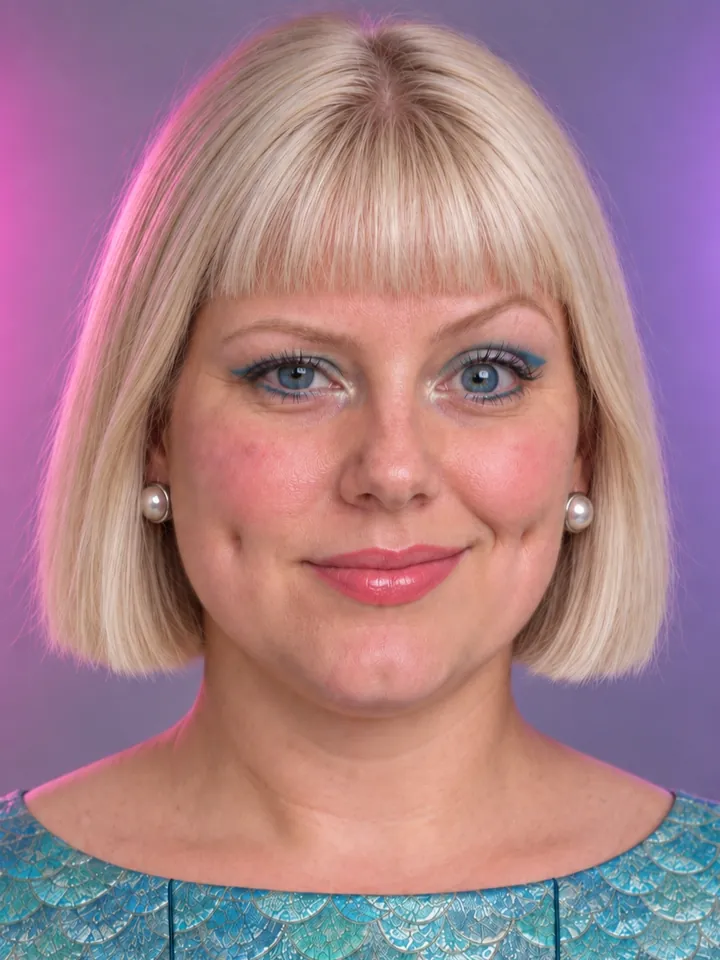
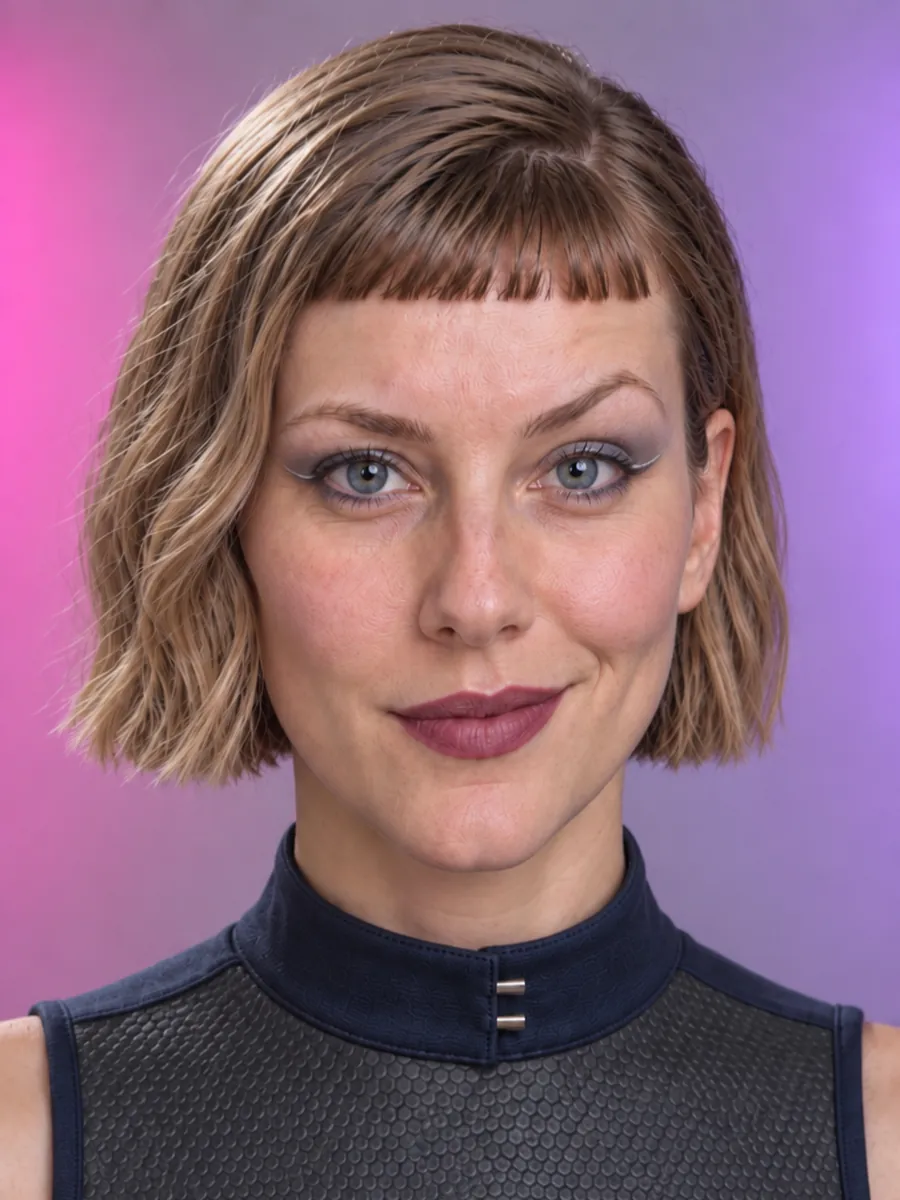
Choose a type of bob below. Each panel shows a short profile, the hair it often suits, the approximate effort for cutting and styling, and an example image from the catalog. The images show fictional, AI-generated characters; the hairstyle is an example, not a benchmark for your own hair.
Which type of bob would you like to read about?
Lob (long bob)
Short profile: The lob ends roughly at the collarbone, a little lower than “shoulder-length.” It’s the gentlest starting point, because the hair can usually still be tied into a short ponytail. The boundary isn’t standardized: some salons already call shoulder-length hair a lob.
Suitable hair: Almost any texture. With thick hair, internal layering removes weight; with fine hair, a single length looks fuller; with wavy hair, the length keeps the hair from springing up too much.
Effort: low to medium. Trims are needed less often, because the shape looks good for longer.

If you’re starting from very long hair, you’ll find the route through in-between lengths in the guide From hip-length to a bob.
Blunt bob
Short profile: “Blunt” means the ends finish in a straight, clean line with no visible layers. The length is usually at the chin or jaw.
Suitable hair: Especially straight, fine to normal hair, because the straight line makes it look denser. With very wavy or curly hair, the clean line only appears when blow-dried or straightened.
Effort: medium to high. The line quickly shows any growing out, so regular trims are part of the look.
French bob
Short profile: The French bob usually ends between the chin and jaw, often a little shorter than a classic bob, and typically comes with short bangs that end well above the brows. The ends are often lightly thinned, and the overall look feels relaxed.
Suitable hair: Works well with a slight wave and normal density. On very straight, fine hair it can quickly look severe; on very thick hair it needs thinning so the bangs don’t stick out.
Effort: medium. The bangs often need trimming every few weeks, but the rest is very forgiving.
A-line bob
Short profile: Also called an “inverted bob”: the hair is shorter at the nape and gets longer toward the front at the sides, creating an “A” when seen from the side. The length is usually chin- to jaw-length in front and roughly at the nape in back.
Suitable hair: Straight to slightly wavy hair with normal to thick density; the shorter nape needs hair that can hold the edge. With fine hair, a gentle angle works best.
Effort: medium to high. The angle is lost as the lengths grow out.

Layered bob (textured bob)
Short profile: The hair is cut in layers, creating movement and softly feathered ends. The length usually sits at the jaw or just below it.
Suitable hair: Thick and wavy hair benefits because weight is removed. Very fine hair can quickly look thin with lots of layers.
Effort: medium. Textured shapes are more forgiving as they grow out, but often need styling so they don't look messy.

Where the length sits: body landmarks instead of names
Names are vague; body landmarks are clear. At the salon, say “ends at the chin” rather than “bob.” From long to short:
- Collarbone: The ends stop at about collarbone level, where the chest begins. Typical range for a lob.
- Shoulder: The ends rest on the shoulder line and touch the collar, a little higher than collarbone length (“shoulder-length”). Some salons already call this a lob.
- Chin: classic chin-length bob.
- Jaw: short bob at jaw level; the ends fall along the jawline, between the earlobe and the chin.
- Ear: very short bob; the ends fall at earlobe level, and the ear is often partly visible.
- Nape: The ends stop at the nape. Where the bob ends and the pixie begins isn't fixed; learn more in the pixie cut guide.
Roughly how many centimeters a body landmark corresponds to depends on your height; the hair length converter does the math. This is a different measurement from the cut length your hairstylist mentions, which is often measured differently. Ask at the salon for the number in inches.
In our episodes you see the same character at four stages, for example hip-length, shoulder blade (about chest-length), collarbone and jaw; the in-between lengths vary slightly from episode to episode. A practical example: Antonia, a fictional, AI-generated character with heavy, straight, dark blonde hair, ends her episode with a jaw-length bob. With thick hair, the layering determines how much weight remains.
Line, bangs and nape: the three key adjustments
Blunt line or layers?
After length, this is the most important decision. A blunt line emphasizes shape, shine and precision. It needs regular trims to keep the line crisp. Layers create volume and movement, remove weight and can be worn more casually. As a rule of thumb: the finer the hair, the fewer layers; the thicker or wavier, the more internal layering pays off. Hybrids are common: a clean line on the outside, lightened on the inside.
Bang options for bobs
- Straight bangs: clean and graphic, ending above or at the brows.
- Short bangs (micro bangs): end well above the brows, stand out, need frequent trims.
- Side-swept bangs: taper off to the side and are easier to grow out.
- Curtain bangs: parted in the middle and longer toward the sides.
- No bangs: the bob stays calmer and needs the least maintenance.
With cowlicks or a pronounced hairline, bangs may fall differently than expected. Ask at the salon whether your hairline suits them.
Nape outline: the underrated part
From behind, the outline determines whether a bob looks rounded, straight or angled forward. Options include a rounded line, a straight edge, a short, slightly angled outline or a softly thinned transition. When a short nape flows into sides that get longer toward the front, you get an A-line bob. If you have the nape cut short, keep in mind that this area visibly grows back and needs trimming sooner than the rest. So show the salon a photo from behind as well.
Which hair suits which cut?
All of this is guidance, not rules. A good stylist decides based on your actual hair.
- Fine hair: often works well with a blunt bob or chin- to jaw-length with few layers; lots of layers make the ends look thin.
- Thick hair: benefits from internal weight removal, a layered bob or a lob; a short, blunt bob can turn boxy.
- Wavy hair: often looks shorter after the cut because waves “swallow” length. Plan a little longer and have the hair checked dry at the salon.
To find out which shape suits your face's proportions, read the guide Which bob suits my face shape?
Types of bob compared
The classic bob and the short bob appear only in the table, because they differ mainly in length. Effort refers to the cut and styling, not hair care.
| Bob type | Length on the body | Line | Effort (cut and styling) |
|---|---|---|---|
| Lob | Collarbone | straight or softly layered | low to medium |
| Classic bob | Chin | straight, rounded finish | medium |
| Blunt bob | Chin to jaw | blunt, clean edge | medium to high |
| French bob | Chin to jaw | loose, lightly thinned, with short bangs | medium |
| A-line bob | chin to jaw in front, shorter in back | tapering longer toward the front | medium to high |
| Layered bob | Jaw | layered, soft ends | medium |
| Short bob | Jaw (between earlobe and chin) | straight or lightly layered, often with bangs | high |
| Very short bob | Ear (earlobe) | straight or lightly layered | high |
Common misconceptions
- “A bob is a bob.”
- Depending on the salon, it can mean anything between the ear and the collarbone. Always name the point on the body.
- “A lob is hardly a change.”
- Even when only a few centimeters come off, the line and layering can often change the overall look noticeably.
- “A French bob is any bob with bangs.”
- What defines it is a short length, loose ends and short bangs, not just the presence of bangs.
- “An A-line bob is just longer in front.”
- The key is the contour at the nape. Without it, the shape lacks structure.
- “It looks sleeker in the photo.”
- Photos are often blow-dried and styled. Ask how the cut falls unstyled with your hair texture.
Effort: How often should you visit the salon?
These are common rules of thumb from hairstyle guides, not a fixed rule: with a bob, many people go every four to eight weeks, often every five to six. With a lob it’s more like six to eight weeks, and with very short styles (pixie) three to seven weeks, often four to six. Crisp lines and bangs tend toward the shorter end of the range. Hair grows on average about 1 cm (0.39 in) a month (a guideline), so a style whose look depends on its line quickly loses its shape; bangs and the nape show regrowth more than the rest. The haircut appointment calculator works out the right rhythm for your cut. For everyday tips on styling and drying, see the guide Caring for and styling short hair.
How to describe what you want at the salon
State the length as a point on your body, show pictures from several angles, and say whether the line should be blunt or layered and whether you want bangs or not. The complete prep list is in the guide Preparing for your salon appointment. For the conversation itself, these questions help:
Questions I ask the salon
- I ask whether the line will be cut blunt or layered.
- I ask how the cut will fall unstyled with my hair texture.
- I ask whether my hairline can carry bangs, and at what length.
- I clarify how the outline at the nape should look.
- I ask how much shorter my hair will look once it's dry.
- I ask after how many weeks the shape should be trimmed.
- I have them explain what “a little shorter” means in centimeters.
FAQ
What is the difference between a bob and a lob?
A lob (long bob) is a longer bob that usually ends around the collarbone, a little below shoulder-length. The boundary isn't standardized, so name the point on your body at the salon.
What makes a French bob?
Typical features are a length between chin and jaw, soft, slightly thinned ends and short bangs. Here, too, there is no fixed definition.
What is an A-line bob?
The hair is shorter at the nape and gets longer toward the front at the sides, creating an A shape. It's also called an inverted bob, though the names aren't used consistently.
Which bob needs the least effort?
As a rule of thumb, a lob without bangs, because growing out is less noticeable. A softly layered bob is also forgiving as it grows out but often needs a bit of styling. Blunt lines and short bangs need trimming more often.
How do I get exactly the bob I have in mind at the salon?
Bring pictures from several angles, name the length on your body, and clarify line, layering and bangs in advance.
Is a bob good for fine hair?
Often yes, especially with a blunt line and few layers, because the hair then looks thicker. What matters is an assessment of your own hair at the salon.
More guides
- Which bob suits me?
- Preparing for your salon appointment
- From hip-length to a bob
- Pixie cut guide
- Caring for and styling short hair
- Growing out without frustration
- Hairstyles through the decades
- All guides at a glance
All packs with filters by hairstyle and hair color
The guides are no substitute for personal advice at the salon.